Extract from I taught them to Cook – memoir of teaching in an east London comprehensive school in 1970s
June 1973 brings the final judgement of my teaching skills. The Cookery Practical Exam. Sixty students have to cook an elaborate, edible meal, with a hot drink, flower arrangement and other silly exam tasks that they throw at us. This feat takes place over several days as each student is allowed their own cooker and sink.
These are the tasks they have to choose from:
1. ‘Cook a two course lunch for 4 people and prepare an evening dish for someone coming back from a fishing trip. Clean a pair of muddy football boots.’
2. ‘Prepare a hot breakfast for a family of four who is going out for the day. Make a packed lunch and some cakes and a drink for them to take with them. Wash and starch some napkins.’
3. ‘Prepare an evening meal for a family with a teenage girl. Make sure that the meal is rich in iron and calcium. Bake some pasties for a packed lunch. Wash and iron a shirt.’
The exam lasts two and a half hours and they must keep to time, produce edible dishes and present on a nicely laid table.
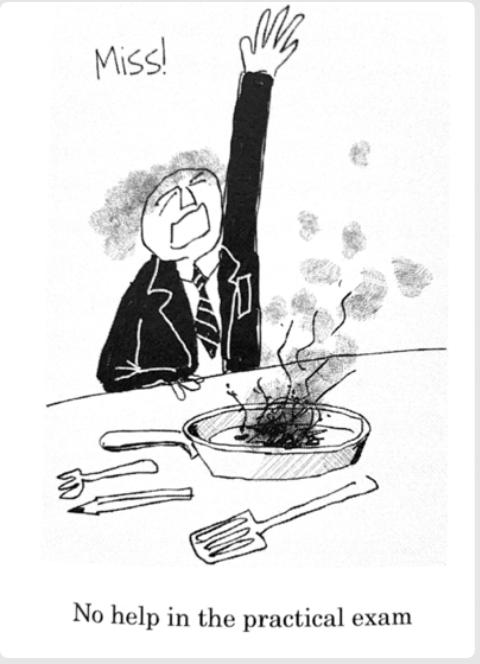
Mr Shield has agreed that the school will cover the exam cost and I must provide all the ingredients. For days they’ve been bringing in their shopping lists and we’ve checked and added stuff if they’ve forgotten. Imagine the howls of dismay if the minced beef for their Cornish pasties was missing.
The exam starts and I switch from helpful teacher to THE EXAMINER and march round the room with my clipboard, watching my students peel and chop vegetables, prepare pastry, bake cakes, biscuits and bread. I take off marks for sloppy cooking skills, messy worktops and general flustered bumbling. They’ve had lots of practice at learning what loses marks. I peek over shoulders, open up saucepan lids, bend down to peer into ovens, and rootle in the rubbish bin for food wastage.
They’ve had warnings during exam rehearsals of things that lose marks.
‘Turn the pan handle in – someone could knock over the boiling water.’
‘Don’t cut off all that potato skin – use a potato peeler.’
‘Use your fingertips to rub the pastry fat into the flour – you are squeezing it into a soggy lump.’
‘Don’t throw bits of pastry away – make jam tarts or cream horns – no wastage.’
‘Don’t peel the apple with the cook’s knife.’
‘If you lick your food I won’t taste it.’
Privately I love licking. Fluffy margarine and sugar, beaten to pale creaminess for Victoria sandwich is my favourite. Foamy, whisked eggs and sugar for Swiss roll comes a close second.
They know the rigid rules to distinguish savoury and sweet dishes. Savoury flans and cheesy scones are cooked and cut with PLAIN rings and cutters.
Sweet tarts and lemon meringue pies must have FLUTED edges. These are the RULES laid down in some Victorian kitchen and they are not to be BROKEN.
On a visit to Sainsbury’s I notice their savoury quiche has a fluted pastry case. I’m shocked at this unforgivable sin committed by food product developers.
And they know the d’oyley rules – plain for savouries and frilly for sweet scones and cakes. One mark lost for the wrong choice and a scowl from me.
On exam day they work in silence. Except for emergencies.
‘I feel sick Miss.’
‘Just keep on cooking Liz – we can’t waste these ingredients.’
‘I’ve dropped my eggs on the floor, Miss.’
‘Bert, here’s a cloth – clear up and start again.’
I only help if there is real danger.
‘Tim – take that tea towel off the top of your cooker. It’s about to catch fire.’
‘Please Miss, it was an accident.’
I press my finger to my lips. No speaking, no excuses, this is the real test.
‘OK, class you have twenty minutes to go.’
Gasps of panic. They must present everything that’s finished. No finished dish = no mark.
‘I’ve burnt the cake, Miss.’
‘Alice cut off the black bits and cover it with icing.’
‘My chocolate mousse isn’t set.’
‘Ray, stick it in the freezer, quick.’
They scurry round the room, tarting up the dishes with garnishes of parsley for savoury and sticky glacé cherries and angelica diamonds for sweet desserts.
Suddenly it is over. ‘Time’s up – present your food.’
Amazing pies with crisp, golden pastry appear hot from the oven.
Steaming dishes of perfectly cooked cabbage and carrots sprinkled with chopped parsley and topped with a knob of melting margarine.
Soft mounds of creamy mashed potato, decorated with a sprig of parsley.
Pineapple upside down cake glistening with glacé cherries and rings of tinned pineapple served with a jug of creamy Bird’s Custard.
And a pot of tea with a strainer, jug of milk, sugar bowl and matching Beryl Ware cups and saucers.
And a rose in a polished vase. And a clean pair of football boots. Or a starched tray cloth.
They scramble out leaving sinks heaving with dirty plates, bowls, burnt pans and sticky baking trays.
Now for my marking session.
All dishes have to be tasted and my face remains deadpan. The students peer through the classroom windows watching for my reactions. When I tasted an unusually sweet beef stew, I realised the student used icing sugar instead of flour to thicken the sauce. The dish was inedible so no marks. I think she saw me screw up my face in horror.
There are other ways I test their cooking. Are the bread rolls crisp? Is the shepherd’s pie well seasoned? Are the vegetables cooked but not overcooked? Has the egg custard curdled? Is the cake thoroughly baked?
I poke and prod, slice, taste and appreciate. It is delicious. They have done me proud.
The marking is over and they surge in to photograph and fuss. Friends come in to congratulate but mainly to eat. Then pack up, wash up, and leave with a wave and ‘Thanks Miss – I enjoyed that.’
I have taught them to cook and they have learnt well.
 Jenny Ridgwell
Thanks for reading