It’s my story of teaching cookery in east London – I’m a piece of living social history – there are few of us left!
What’s the talk about?
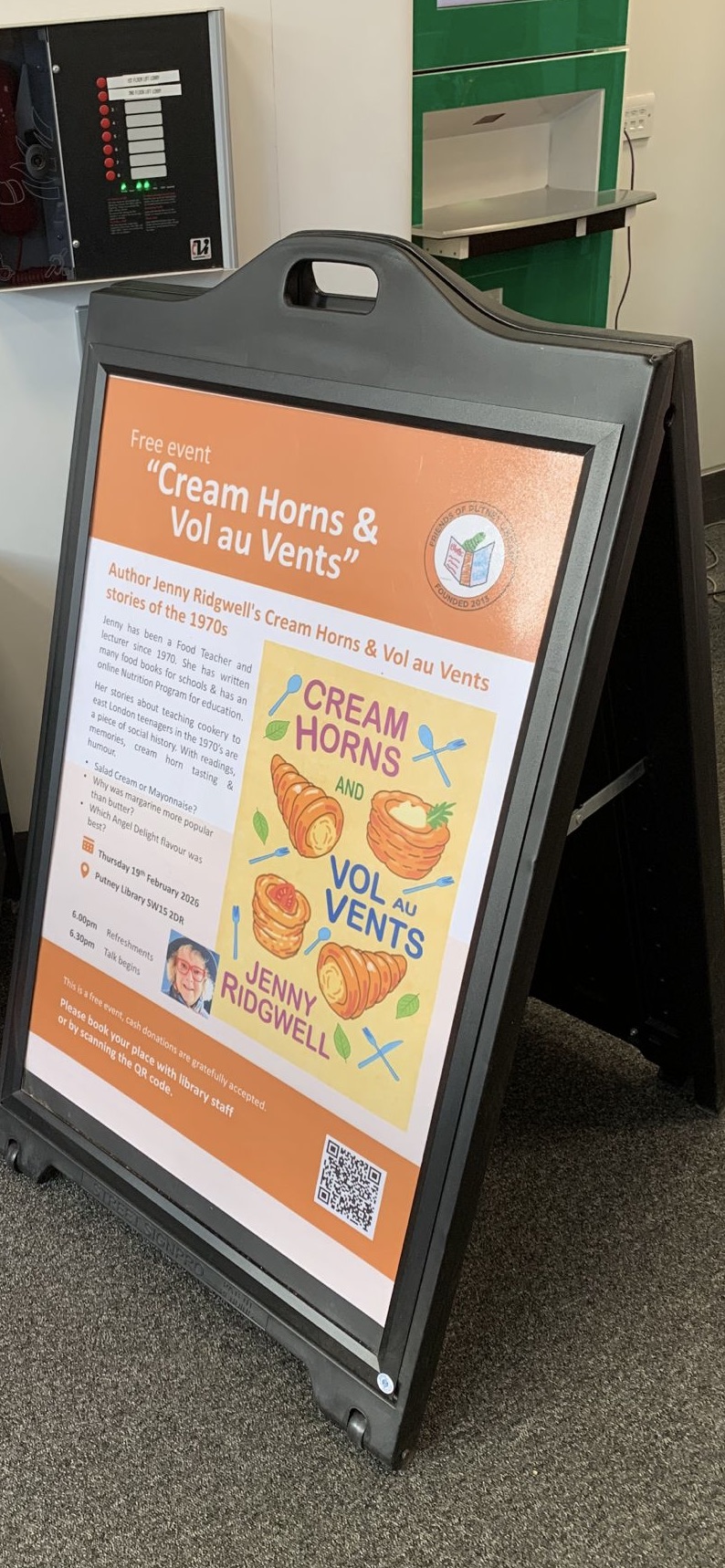
Based on stories from Cream Horns and Vol au Vents, published 2026, about teaching cooking in an East London comprehensive in the 1970s.
Prue Leith said – ‘An accurate, and sometimes very funny, account of the trials of a young food teacher in the 70’s.’
Prue Leith reviewed the book.
Reviews ‘Excellent laugh out loud book, a must for any foodie or food teacher.’
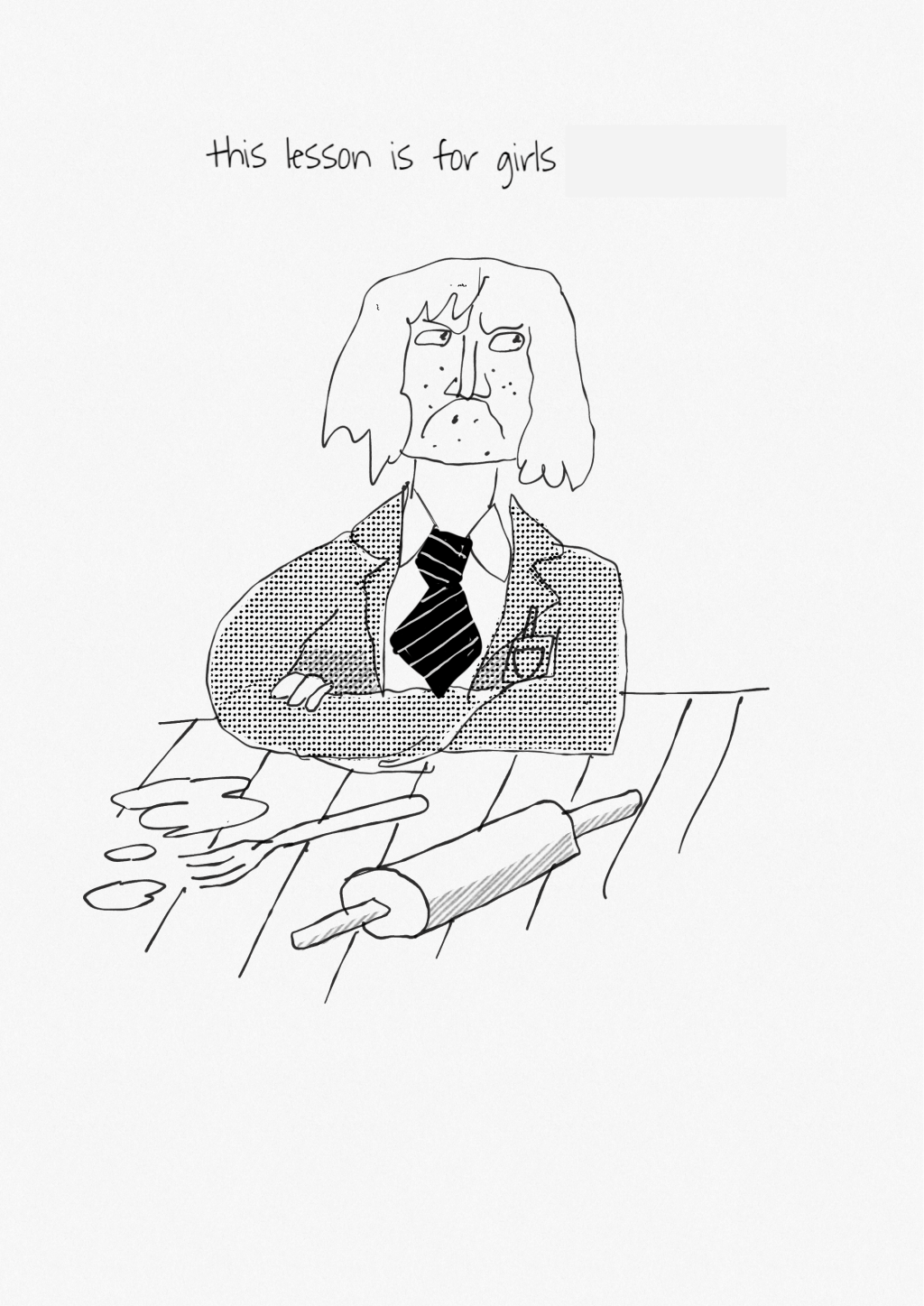
The 1970s was a time of great change in our food choices yet I had to teach old fashioned ideas like starching a tray cloth and deciding which doyley to use. Boys could learn to cook for the first time, yet the textbooks were about being a good housewife. How could food education be so undervalued?
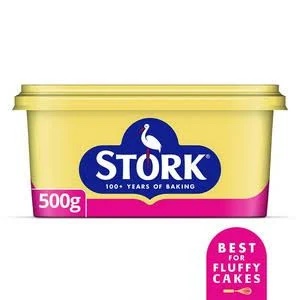
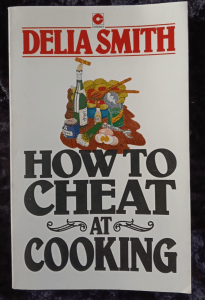
Who remembers Salad Cream, Stork margarine, Angel Delight, Birds Custard? I’ll tell you stories of their invention and read about my Awful Offal lesson and how Delia taught me to cheat at mince pies.
My books – with 5* reviews – can be found on Amazon and other details are on my website.
Extract from I taught them to Cook – memoir of teaching in an east London comprehensive school in 1970s
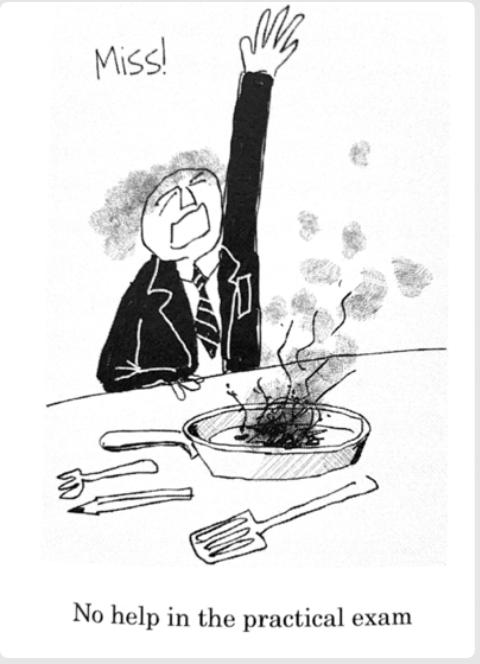
June 1973 brings the final judgement of my teaching skills. The Cookery Practical Exam. Sixty students have to cook an elaborate, edible meal, with a hot drink, flower arrangement and other silly exam tasks that they throw at us. This feat takes place over several days as each student is allowed their own cooker and sink.
These are the tasks they have to choose from:
1. ‘Cook a two course lunch for 4 people and prepare an evening dish for someone coming back from a fishing trip. Clean a pair of muddy football boots.’
2. ‘Prepare a hot breakfast for a family of four who is going out for the day. Make a packed lunch and some cakes and a drink for them to take with them. Wash and starch some napkins.’
3. ‘Prepare an evening meal for a family with a teenage girl. Make sure that the meal is rich in iron and calcium. Bake some pasties for a packed lunch. Wash and iron a shirt.’
The exam lasts two and a half hours and they must keep to time, produce edible dishes and present on a nicely laid table.
Mr Shield has agreed that the school will cover the exam cost and I must provide all the ingredients. For days they’ve been bringing in their shopping lists and we’ve checked and added stuff if they’ve forgotten. Imagine the howls of dismay if the minced beef for their Cornish pasties was missing.
The exam starts and I switch from helpful teacher to THE EXAMINER and march round the room with my clipboard, watching my students peel and chop vegetables, prepare pastry, bake cakes, biscuits and bread. I take off marks for sloppy cooking skills, messy worktops and general flustered bumbling. They’ve had lots of practice at learning what loses marks. I peek over shoulders, open up saucepan lids, bend down to peer into ovens, and rootle in the rubbish bin for food wastage.
They’ve had warnings during exam rehearsals of things that lose marks.
‘Turn the pan handle in – someone could knock over the boiling water.’
‘Don’t cut off all that potato skin – use a potato peeler.’
‘Use your fingertips to rub the pastry fat into the flour – you are squeezing it into a soggy lump.’
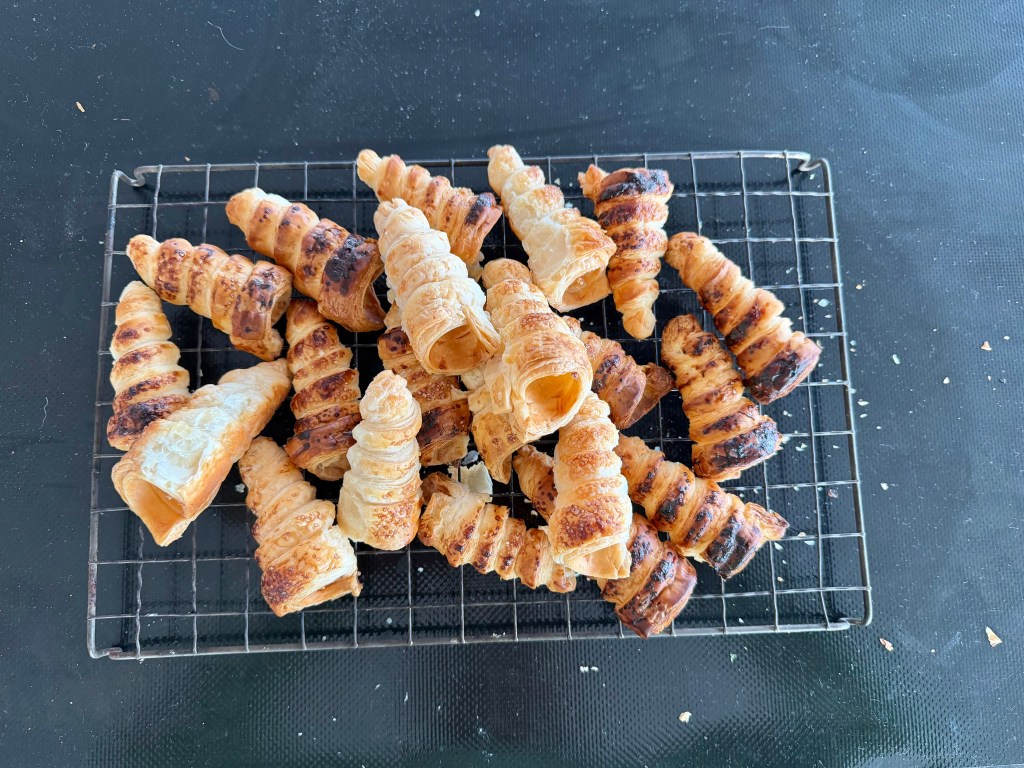
‘Don’t throw bits of pastry away – make jam tarts or cream horns – no wastage.’
‘Don’t peel the apple with the cook’s knife.’
‘If you lick your food I won’t taste it.’
Privately I love licking. Fluffy margarine and sugar, beaten to pale creaminess for Victoria sandwich is my favourite. Foamy, whisked eggs and sugar for Swiss roll comes a close second.
They know the rigid rules to distinguish savoury and sweet dishes. Savoury flans and cheesy scones are cooked and cut with PLAIN rings and cutters.
Sweet tarts and lemon meringue pies must have FLUTED edges. These are the RULES laid down in some Victorian kitchen and they are not to be BROKEN.
On a visit to Sainsbury’s I notice their savoury quiche has a fluted pastry case. I’m shocked at this unforgivable sin committed by food product developers.
And they know the d’oyley rules – plain for savouries and frilly for sweet scones and cakes. One mark lost for the wrong choice and a scowl from me.
On exam day they work in silence. Except for emergencies.
‘I feel sick Miss.’
‘Just keep on cooking Liz – we can’t waste these ingredients.’
‘I’ve dropped my eggs on the floor, Miss.’
‘Bert, here’s a cloth – clear up and start again.’
I only help if there is real danger.
‘Tim – take that tea towel off the top of your cooker. It’s about to catch fire.’
‘Please Miss, it was an accident.’
I press my finger to my lips. No speaking, no excuses, this is the real test.
‘OK, class you have twenty minutes to go.’
Gasps of panic. They must present everything that’s finished. No finished dish = no mark.
‘I’ve burnt the cake, Miss.’
‘Alice cut off the black bits and cover it with icing.’
‘My chocolate mousse isn’t set.’
‘Ray, stick it in the freezer, quick.’
They scurry round the room, tarting up the dishes with garnishes of parsley for savoury and sticky glacé cherries and angelica diamonds for sweet desserts.
Suddenly it is over. ‘Time’s up – present your food.’
Amazing pies with crisp, golden pastry appear hot from the oven.
Steaming dishes of perfectly cooked cabbage and carrots sprinkled with chopped parsley and topped with a knob of melting margarine.
Soft mounds of creamy mashed potato, decorated with a sprig of parsley.
Pineapple upside down cake glistening with glacé cherries and rings of tinned pineapple served with a jug of creamy Bird’s Custard.
And a pot of tea with a strainer, jug of milk, sugar bowl and matching Beryl Ware cups and saucers.
And a rose in a polished vase. And a clean pair of football boots. Or a starched tray cloth.
They scramble out leaving sinks heaving with dirty plates, bowls, burnt pans and sticky baking trays.
Now for my marking session.
All dishes have to be tasted and my face remains deadpan. The students peer through the classroom windows watching for my reactions. When I tasted an unusually sweet beef stew, I realised the student used icing sugar instead of flour to thicken the sauce. The dish was inedible so no marks. I think she saw me screw up my face in horror.
There are other ways I test their cooking. Are the bread rolls crisp? Is the shepherd’s pie well seasoned? Are the vegetables cooked but not overcooked? Has the egg custard curdled? Is the cake thoroughly baked?
I poke and prod, slice, taste and appreciate. It is delicious. They have done me proud.
The marking is over and they surge in to photograph and fuss. Friends come in to congratulate but mainly to eat. Then pack up, wash up, and leave with a wave and ‘Thanks Miss – I enjoyed that.’
I have taught them to cook and they have learnt well.
It’s the weekend. I’m back in Kettering and visiting my grandmother to get some free rhubarb from her garden for my lessons. The pink, tender stems that she forces under metal buckets are saved for the family but she’s happy for me to pick the huge clumps thriving on her compost heap. I cut armfuls – leaves and all – but Grandma’s bothered.
‘Those rhubarb leaves can poison people.’ She’s heard a story of someone who ate the leaves, had severe stomach pains and ended up in hospital. Grandma boils the leaves with water to make her aluminium pans shiny clean and she reckons that if the leaves strip your stomach in the same way as they remove stuck bits from her pans, then that could be painful.
‘Don’t give those children the leaves. You could get into trouble.’
‘Don’t worry – I’ll warn them.’
Grandma knows about London children. Evacuees from east London were billeted in her house during the Second World War. They attended Park Road Infants School, thrived on her cooking and helped with her garden. She’s very proud of her certificate from Queen Elizabeth II thanking her for this service, which she keeps in a faded envelope with its official stamp in her treasured front room cabinet.
‘Just a word. Have you got another boyfriend yet? Time’s passing Jenny. This job is not everything you know. Make time to watch the flowers grow.’
Bah. I’m twenty four, everyone is getting married, I live alone in a dismal Hampstead bedsit and drive an old Mini Traveller with green moss, which matches the colour of the car’s paintwork, growing on its window edges. And I have a job where most of the time I’m dressed in a nylon overall and matching pink rubber gloves, and I rarely leave the room. Back in the classroom, I plonk the pile of rhubarb on the demonstration table.
‘Class – to warn you – these leaves are poisonous, so don’t eat them. They can give you a stomach ache and some people have died after eating them.’
Who knows if the death story is true? I have their attention.
‘How did they die?’ It’s early but Bert is alert.
‘The leaves contain toxic oxalic acid and that means they are poisonous.’
‘Why does the poison just go into the leaf? What about the rest?’
Bert has a clever point. I’ll have to ask the biology teacher.
‘Miss, can I have those leaves?’
Ah ha. I can see where this diversion is leading. Bert’s after my rhubarb leaf mountain. We’ve just had the school acid attack in the Chemistry lab when a boy was pushed onto a stool covered in nitric acid. It burnt the backside off his school trousers and he was whipped off to Whipps Cross Hospital to have the skin on his bottom soothed. Whispers said Gavin was involved. He was supposed to be going to another school, but it turns out no one will have him, so he could be back in my lessons. Next to enter the school gossip calendar could be the rhubarb poisoning scandal. And it’ll be my fault.
‘Bert, I’m taking these leaves home, so just watch my demonstration on Rhubarb fool that we’re making today and stop plotting. Remove the leaves, wash and chop the stems, put them in a saucepan and cook in a little water with the lid on until they are soft.’
I’m learning to give my classes very clear cooking instructions after several disasters ended in the bin. I once told Robert to boil his potatoes until they were soft so he stuffed them, unpeeled, into my electric kettle, filled it with water and clicked it on. It took ages to poke out the mushy, mashed up bits. For today’s lesson I’ve got a ‘Here’s-one-I-made-earlier’ bowl of Grandma’s pink, cooked rhubarb just like a Blue Peter presenter. It gets passed round the group with little approval.
‘Now to make custard.’
My grandmother and I used to make Bird’s custard together to go with her apple crumbles, gooseberry pies and strawberry jam sponges. There is a magic moment when you stir pale peach custard powder with gritty granulated sugar and mix with a little milk. Suddenly the mixture turns into a bright yellow liquid – a chemical mystery that probably holds its truth in tartrazine.
‘To make the custard, pour hot milk into this mixture and stir quickly until it thickens.’
A golden, glossy custard glimmers in the bowl.
‘Mix together your cooked rhubarb, the custard and some
drops of red colouring.’
The red colouring is made from crushed cochineal beetles but I’m not sharing that secret. Imagine the screams.
‘We ain’t eating beetles.’
‘Whisk the egg whites until stiff and fold in. Spoon into a glass
dish and top with a glacé cherry.’
They chop, cook and stir, beat and mix. Soon my table is covered with glass dishes in various shades of pink. Each served on a saucer with a frilly d’oyley. Always a bloody d’oyley. There are hundreds to use in the storeroom. The lesson is over and we have made a potion of rhubarb with enhanced colours and flavours which richly deserves the name fool. I must ask Cynthia what happened to the rhubarb leaves.



 Jenny Ridgwell