Boys were able to take cookery lessons from the 70s.
Read my story of why so many came to my classes.
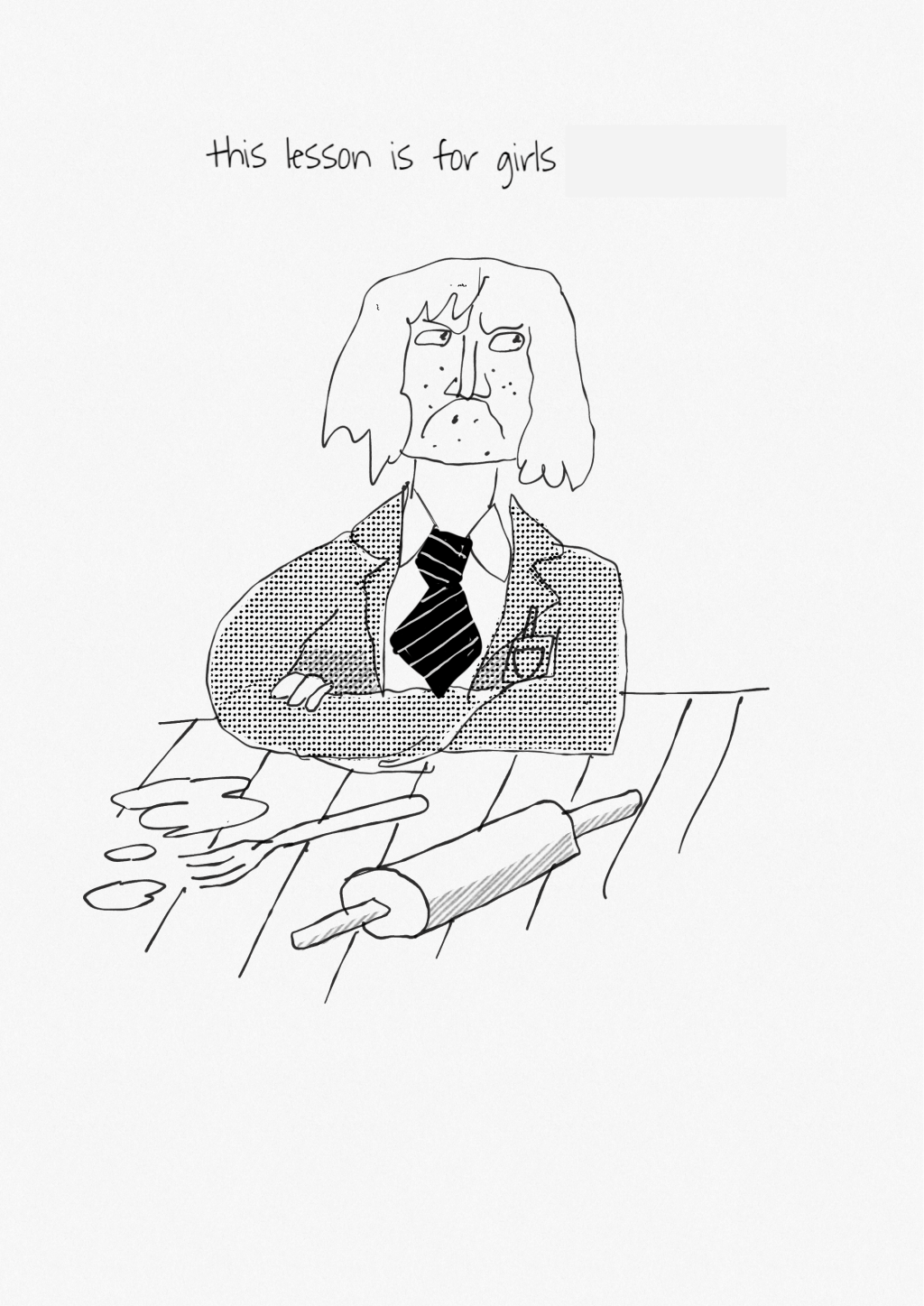
Boys were able to take cookery lessons from the 70s.
Read my story of why so many came to my classes.

For their out of date 1970s Housecraft exam they must starch and iron a tray cloth
We used starch powder for this pointless task.
Read all about it here
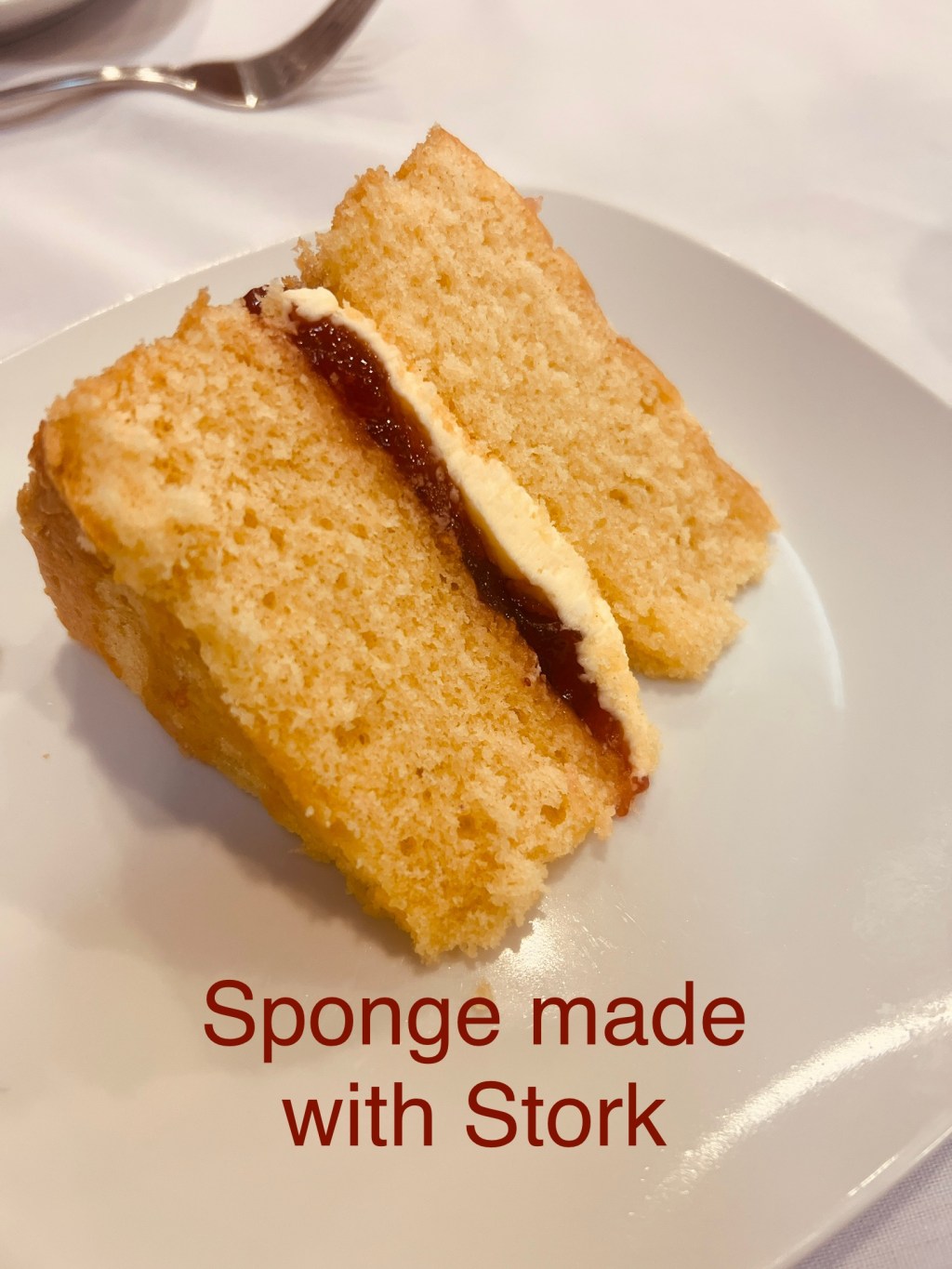
Have you noticed Stork is not called margarine?
My story of teaching with Stork is on this link.
It was the start of the famous All in one method, which exam boards didn’t like – not skillful enough!

It’s one of the stories in my next book
Cream Horns and Vol au Vents – ready November 2025
Teaching Peas and making Pea risotto.
Remember the Bird’s Eye advert?
Sweet as the moment when the pods went pop.
Read the full story on this link

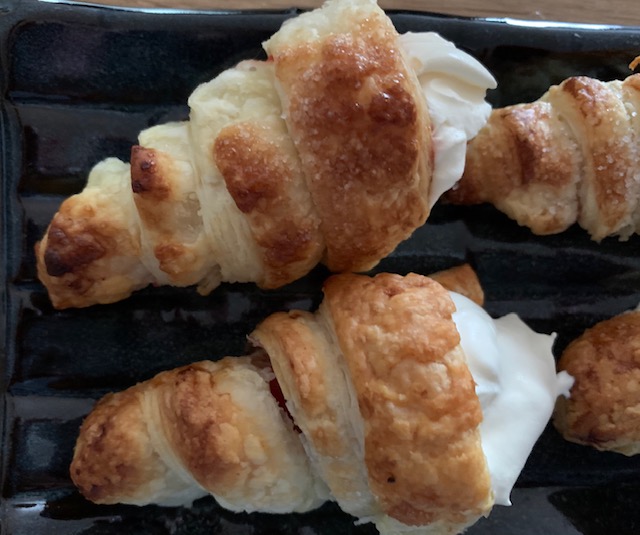
In the 1970s we made the rough puff pastry but it is so much easier just to buy it ready rolled in a packet! Find cream horn tins on ebay, in antique shops or Nisbets
Ingredients
320G Pack Ready Rolled Puff Pastry
Jam
Whipped Cream
Sugar To Sprinkle On Pastry
Oil To Grease Cream Horn Tins
Method
Preheat the oven to 200C, Gas 7.
Roll out the pastry from the packed and cut into strips 2x20cm long.
Dampen the pastry with water and wind round the tins starting at the pointed end and overlapping the strips.
Place on a baking sheet with joins underneath and brush with sugar and water for the glaze.
Bake for 10 minutes, glaze again then bake a further 7-10 minutes until crispy and golden brown.
Leave to cool and carefully remove the pastry from the tins.
Spoon some jam into the the horn and fill with whipped cream.
History note
The Stork cookery book suggests a Mock cream instead of real cream which was very expensive at the time.
Ingredients – level tbs cornflour, 1/4 pint milk, 2 oz Stork margarine, 2 heaped tbs caster sugar, drop of vanilla essence.
Blend the cornflour and milk and boil, stirring all the time. Pour into a basin and leave to cool.
Cream the Stork and caster sugar, slowly add the cornflour mixture a little at a time whilst beating. Add vanilla essence – if liked!
One day I will never ever make rough puff, flaky and puff pastry again. It will be struck off by the exam boards when they realise it is a high fat waste of my student’s time. We might show videos about it as a piece of history.
A nonsense done by daft cookery teachers in the 1970s and silly fun shown on old TV game shows.

One day a factory will make it and we can buy it in supermarkets ready made if we really want to cook with it. The cream horn tins will be thrown away. My students won’t know the meaning of mille feuille.
Eccles cakes, sausage rolls and jam puffs will be bought in cake shops unless a future government puts a ban on them or labels them with big red sticker to show they are very high in fat.
No more pastry made from lard or cheap fishy margarine from county supplies. No more struggling on hot summer days trying to get lumps of fat in between layers of fatty pastry. No more scraping off sticky failures from my work surfaces.
No more greasy baking trays for me to soak after school in the butler’s sink full of boiling water and caustic soda.
No more fatty cooking that drips through the shelves of the oven, splatters the oven sides and glass doors and covers the oven with blobs of grease.
My cookers need an industrial cleaning company to come in after these pastry lessons and remove the amount of grease that has accumulated from these wretched high fat pastry dishes.
After school I spend hours lying on the kitchen floor, scraping out layers of fat and scouring the trays at the bottom of the oven with endless Brillo pads to stop black smoke from billowing out when the ovens are lit.
There is a limit to the cleaning greasy oven punishments I can hand out to naughty students to help with this task!
And no, the school cleaners do not want to do this job – it is not part of their role according to Jim the caretaker.
The exam has been renamed Food and Nutrition. We learn about healthy eating and cutting down on saturated fat. Fatty pastry lessons must stop.
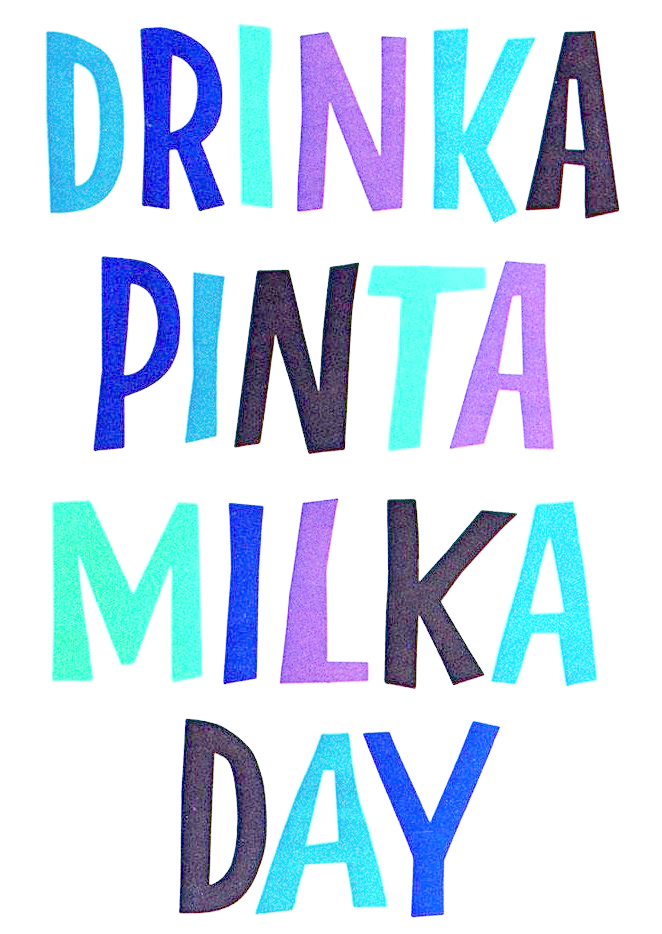
The Drinka Pinta Milka day campaign was launched in 1958 to encourage every adult in Britain to drink a pint a day. The ads emphasized milk’s nutritional benefits – providing calcium and protein for growth, and strong bones and teeth. It was seen on TV, in magazines, and on billboards.
In 2025 in the UK we drink 170 ml a day of milk compared with 400 ml in 1974. Do you know why?
For my book Cream Horns and … I’ve written about my class trip to the National Dairy Council. Big posters lined the wall encouraging milk and cheese consumption. It’s on this link.

This is my story of a Chocolate Mousse lesson in school 1973.
We bought the ingredients for the class – eggs and cooking chocolate, BUT white eggs from the 1950s to 1960s were being replaced with brown eggs. And students thought brown eggs were healthier and best.
‘Class. We’re making chocolate mousse. Bring a plate and collect an egg and a piece of chocolate.
This should be easy but there’s a kerfuffle. Jimmy bangs his fist on my table.
‘Miss, they’ve taken all them brown eggs and I’m not using them white ones. Me mum only buys brown eggs now. They’re healthier and fresher.’
The remaining queue mutters agreement.
‘Class, come and sit round my table. Jimmy – all eggs are the same. You don’t eat the shell.’
‘Miss, brown eggs are natural, I want one of them.’
‘Look, Jimmy we’ll sort something out. We need to know how fresh they are. There’s no information on the box so you must each come up and do the freshness test.’
There’s a large jug of salted water on my table.
‘Put your egg gently in the water. If it sinks it’s fresh, if it floats it’s too old and we’ll throw it away.’
One by one the eggs get tested, dark brown, light brown, the cream and white shelled ones. One by one they sink.
‘See they’re all fresh and the inside’s the same. Trust me Jimmy this time. ’
Back in their places, I see Jill swap her brown egg with Jimmy’s white one. That’s so kind.
‘Class. Let your chocolate melt in a small bowl over a saucepan of water. Then the tricky bit. Separate the egg white and yolk into two bowls. Cool the chocolate, stir in the yolk, then whisk the egg white until it’s stiff.’
‘Fold the egg white into the chocolate a spoonful at a time. Don’t lose the air. Spoon into a glass dish and chill.’
It all sounds so simple. We watch as fluffy and runny dishes of chocolate mousse get stacked in the fridge. Or on the windowsill when we run out of room. Soon they set and we’ll plop on a glacé cherry and an angelica diamond.
Cynthia hands round teaspoons and they tuck in.
‘Hey class? Why don’t eggs tell jokes?’
I wait a few seconds.
‘Because they’d crack each other up.’
They laugh and for now it doesn’t matter if eggshells are white or brown.
Grace Dent in her best selling memoir Hungry says home economics was the one lesson where she could shine.
Nigel Slater was the only boy in his domestic science class but it took a long time for Miss Adams to teach him to cook.
So do other famous food writers value their cooking lessons at school? The Guild has over 550 members who are authors, broadcasters, columnists and journalists and they are passionate and knowledgeable about food.
I asked if they learnt to cook at school and if not why not.
65% of respondents said Yes and 35% said No.
Many were not allowed to but why? The message was clear. Cooking was not considered an academic subject and clever students, like some Guild members, had to study Latin or science instead. They were actively discouraged from learning to cook.
In high schools and grammar schools only the less academic were allowed to learn home economics. Several begged to take the subject but had to wait until they left school to study for themselves.
A level Domestic Science was not accepted as a qualification for university and others, like me, had to take more exams to make up for this. Clearly, for Guild members, learning about food is their passion and they have a hugely diverse range of job opportunities open to them.
Here are replies from members who loved their lessons.

Liz Trigg says ‘I absolutely loved it and had a great inspiring teacher Mrs Susan Hopps. I then went on to study a Bsc in Home Economics at Cardiff University’.
Liz has a successful food media career as a food editor in magazines and writing cookbooks.

Lorna Rhodes replied
‘I loved domestic science at school and did the new course at Salford Tech for Home economics for higher education – led onto a job with Cadbury’s and then freelancing writing and food styling.’
Lorna’s website says ‘Food has been the story of my life!! I have had a successful career as a cookery writer and food stylist for over 30 years having trained as a home economist.’
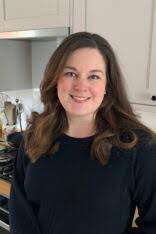
Charlotte Pike is an award winning cookery writer, teacher and chef.
‘I did GCSE Food Technology in 2001. I was told off for taking my Mum’s copy of Delia’s Complete Cookery Course in by my teacher! Food Technology was dull.’
Lynsey Hollywood is the manager of the Food & Drink Business Development Centre and Course Director for the MSc Food Design and Innovation at Ulster University Business School.
‘I look back on my HE classes with really fond memories and am genuinely so appreciative of the topics I was taught relating to sustainability, health, budgeting and nutrition as well as the skills I gained in cooking and research.’

Jennifer John runs Ceres PR, a specialist food and wellbeing PR and marketing agency
‘I did O level & A level HE then the National Diploma was a brilliant education all round – in so many subjects!’

Jane Milton writes about the food industry and often appears as an expert on television programmes representing the industry.
‘I did O’ grade and Higher Home Ec. In my higher studies chemistry and Home Ec were time tabled against each other as ‘if you are clever enough to do chemistry, you would not do Home Ec.’ The School year book says – Course of Higher Education as they could not bring themselves to say I had gone on to do a degree in HE! ‘

Sam Bilton is an established Food Historian, writer and cook.
‘I did Home Economics as an O level in the 80s. I had a very enthusiastic home economics teacher so I enjoyed it. No one suggested I do Home Economics as an A level. I wish they had as I’m sure I’d have got better results!’
Clare Gordon Smith is a food writer, stylist and editor.
‘I did Home Economics at school, but had to change school to get there as the previous school didn’t think it much of a subject!’
What are the views of food writers who did not study cookery at school?

Angela Clutton writes award winning cookery books and runs food events for Borough Market and the British Library and regularly appears on TV.
‘At my school you did either Latin or Home Ec – and this was a decision made by the teachers, not the pupils. The ‘clever’ girls did Latin… Ridiculous and makes me sad even to write it here.’
Liz Wright, editor of the Smallholder Magazine, replied
‘I’d like to have done more but I was academic so they wouldn’t let me – didn’t do me a lot of good, left school at 15 because I hated it.’
‘I went to a Direct Grant Girls’ School in the sixties. No Domestic Science, no sewing. The headmistress apparently didn’t approve.’ Kay has been a book editor for many years and runs a travel gourmet blog.
Not all are glowing about their cookery teachers. Some replies made me chuckle.
Steff Hafferty is a no dig gardener, garden and food writer, teacher, consultant.

‘It was dreadful, taught by a psycho maths teacher and a psycho nun. I learned nothing about making good food’
Sally Butcher says she’s a crazy cornershop keeper. Restaurateur. Masquerades as a chef.
‘My home economics teachers were appalling. I couldn’t wait to drop both classes.Kay Gale ‘I went to a direct grant girls’ school in the sixties. No domestic science, no sewing. The headmistress apparently didn’t approve.’
My conclusions?
Since I started teaching in the 1970s, home economics, domestic science, cookery or whatever else you want to call it, has been challenged. The Guild members describe the enjoyment many found in cooking at school, yet others were stopped from taking the subject and told they were too academic and had to do other things. Learning about food deserves more respect. Well done to those Guild members who found a way in later life to get qualified and earn their living working with food.
In 2021 there is a shortage of people needed in the hospitality and catering industry, our weekend papers are packed with food news and recipes, and the public demands good quality food in supermarkets and restaurants. But our food teachers still struggle with lack of technician support for their busy classrooms and need help funding ingredients so that all students in their classes can cook. Somehow we need to wave the Food flag and hope that schools of the future give students a chance to learn about this amazing subject that has been such an important part of my life for the last fifty years!
You can read my story teaching cooking in 1970s east London in I taught them to cook.
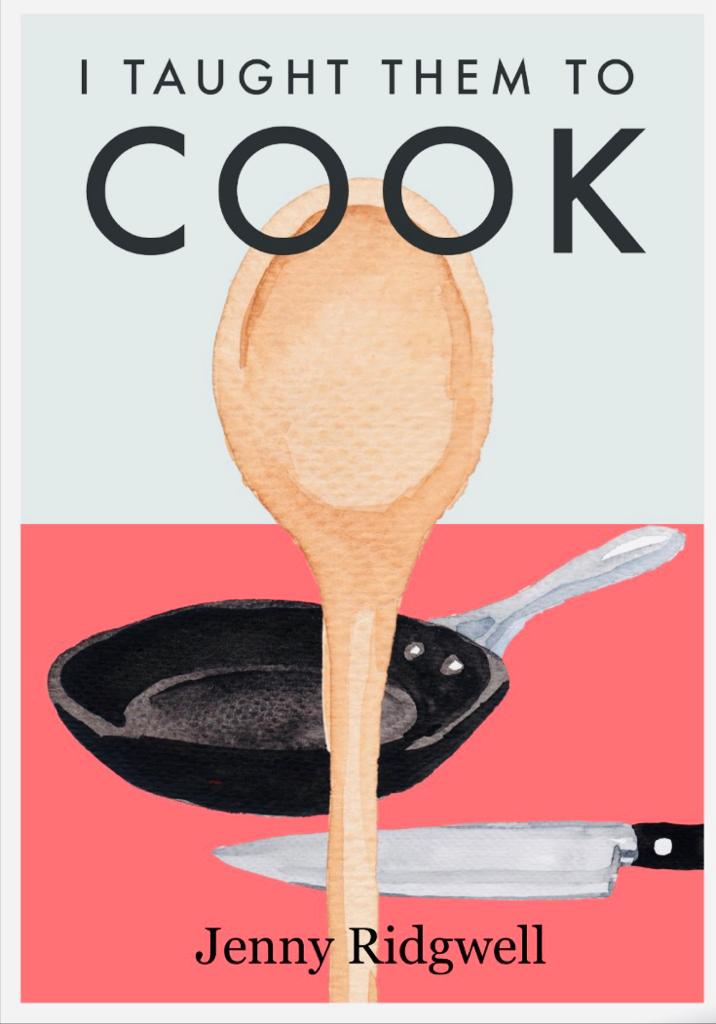
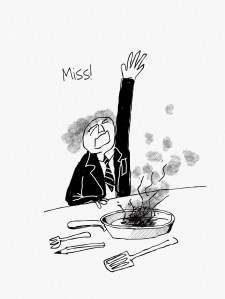
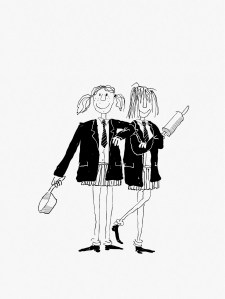
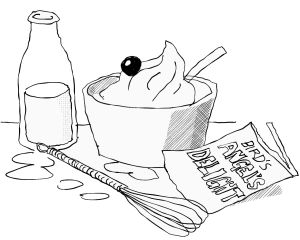
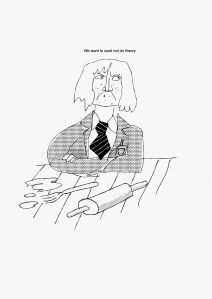
Dave Smith has done some wonderful drawings in the hardback edition of I taught them to cook.
These are images food teachers like:-

 Jenny Ridgwell